Welcome to Qingdao Steel Building Co., Ltd.
Prefabricated Steel Structures: Durable, Efficient, and Future-Ready
01-04
2026
Prefabricated Steel Structures: Durable, Efficient, and Future-Ready
What is a Prefabricated Steel Structure?
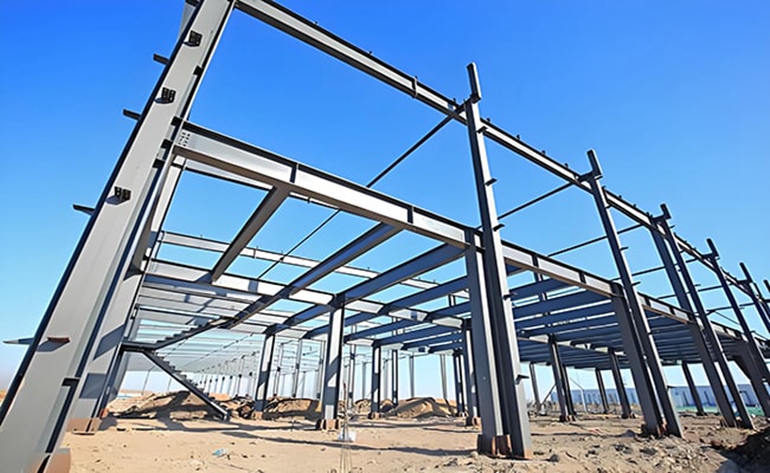
A prefabricated steel structure is a building system in which key components—columns, rafters, beams, purlins, and cladding—are manufactured in controlled factory environments. These components are then transported to the construction site for rapid assembly.
Core features include:
- Factory fabrication that ensures precision and consistency.
- Pre-engineered connections with bolted joints that reduce labor time.
- Modularity for customized layouts across different industries.
- Structural resilience against wind, seismic events, and heavy snow loads.
Unlike traditional concrete or masonry, prefabricated steel relies on industrialized production methods to guarantee both speed and performance.
Why Choose Prefabricated Steel Structures?
How Do They Save Time in Construction?
Traditional projects may take several months or years, but prefabricated steel structures often cut delivery times in half. While foundations are being prepared, steel components are already in production. Once anchor bolts are set, assembly can begin immediately, enabling faster project turnover.
How Do They Reduce Costs Over the Life Cycle?
Savings are not limited to upfront construction. Prefabrication reduces waste, lowers labor costs, and extends the lifespan of the building. With coatings such as galvanizing or fire-resistant paints, steel structures typically last over 50 years with minimal maintenance. This makes them one of the most cost-efficient building systems available.
How Flexible Are Prefabricated Metal Structures for Expansion?
Businesses often outgrow their original facilities. Prefabricated metal structures allow for easy expansion—additional bays, higher eaves, or integrated cranes can be added without dismantling the original frame. This flexibility protects long-term investment and accommodates growth.
Why Are Large-Span Steel Structures More Efficient?
Steel’s superior strength-to-weight ratio supports large-span designs without interior columns. Clear-span layouts maximize usable floor space, a critical factor for warehouses, sports arenas, and logistics hubs where uninterrupted circulation is essential.
How Do Prefabricated Steel Buildings Support Sustainability?
Steel is fully recyclable, and prefabrication reduces site waste. When combined with insulated sandwich panels and energy-efficient roofing, sustainable steel structures help companies meet global green-building standards and reduce operational energy costs.
Where Are Prefabricated Steel Structures Used?
Steel Warehouse Buildings for Logistics and Storage
Steel warehouse buildings dominate global supply chains. Their open interiors, high eaves, and customizable layouts make them ideal for racking systems, forklifts, and automated conveyors.
Prefabricated Workshops for Manufacturing and Industry
Prefabricated workshops are engineered for heavy loads, cranes, and manufacturing equipment. Their adaptability supports industries ranging from automotive to electronics.
Agricultural Buildings with Steel Structures
Farmers increasingly prefer prefabricated steel structures for barns, grain storage, and poultry houses. Their resilience against pests, fire, and humidity ensures consistent agricultural productivity.
Commercial and Public Steel Buildings
Retail complexes, sports arenas, and exhibition halls benefit from steel’s architectural flexibility. Large spans enable multifunctional spaces while modern cladding systems create attractive façades.
Specialized Facilities Such as Hangars and Cold Storage
Aircraft hangars and cold storage warehouses illustrate steel’s adaptability. These buildings require unusual spans, oversized doors, and strict environmental control—all achievable with prefabricated steel systems.
How Are Prefabricated Steel Structures Designed and Engineered?
What Factors Influence Span Design?
Smaller workshops often use single-span frames, while multi-span designs are more economical for very large warehouses.
How Are Loads Calculated in Prefabricated Steel Buildings?
Engineers model dead loads, live loads, wind pressure, seismic drift, and crane wheel loads. This ensures the building can resist environmental and operational stresses.
What Role Do Height and Cladding Materials Play?
Eave height affects storage density, ventilation, and crane capacity. Cladding materials—ranging from simple steel sheets to insulated sandwich panels—impact both thermal performance and energy costs.
Why Are Foundations and Anchor Bolts Critical?
Even the most precisely fabricated steel members cannot perform if foundations are misaligned. Accurate placement of anchor bolts ensures stability, prevents settlement issues, and simplifies erection.
What Are Some Real Examples of Prefabricated Steel Structures?
Case Study: Logistics Warehouse Project
A logistics company commissioned a 30,000 m² prefabricated steel warehouse with a 60-meter clear span, 12-meter eaves, and two 20-ton cranes. The building was completed in four months—30% faster than a conventional alternative—allowing operations to begin ahead of schedule.
Case Study: Agricultural Storage Facility
In Southeast Asia, a prefabricated barn was built to store grain during monsoon seasons. The insulated panels stabilized temperature and humidity, protecting crops and reducing losses. Completion took under three months, proving the speed and reliability of steel systems in agricultural contexts.
What Are the Future Trends in Prefabricated Steel Structures?
- Digital modeling and BIM integration for precision and material efficiency.
- AI-driven optimization to minimize steel tonnage while maintaining safety.
- Green initiatives, including solar-ready roofs and advanced insulation.
- Hybrid construction combining steel with composites or glass for aesthetics.
- Smart logistics facilities, integrating automation with prefabricated frameworks.
These trends confirm that prefabricated steel systems will remain central to global construction.