Welcome to Qingdao Steel Building Co., Ltd.
Prefabricated Steel Structure Solutions for Agricultural Storage
12-31
2025
Prefabricated Steel Structure Solutions for Agricultural Storage
What is a Grain Storage Warehouse?
A grain storage warehouse is a dedicated building designed to protect harvested grain until it is processed or sold. Unlike temporary sheds or small silos, a warehouse provides large-scale capacity with integrated logistics and processing functions. Key features typically include:
- Climate protection: Ensuring grain remains dry and safe from excessive humidity.
- Structural stability: Large spans without internal columns allow for easy movement of machinery and bulk storage.
- Processing integration: Many facilities include cleaning, drying, and packaging zones.
- Logistics readiness: Designed with loading bays and transport access for trucks or containers.
With modern agriculture demanding both volume and efficiency, the trend is moving toward modern grain storage buildings made of steel structures that can be customized to scale.
Challenges in Traditional Grain Storage
Farmers and agribusinesses often face significant challenges with conventional warehouses:
- Moisture Control Issues
In humid climates, concrete or brick structures absorb moisture, leading to grain spoilage, mold, or loss of quality. - Limited Space and Design Flexibility
Older warehouses often include internal columns, limiting movement of machinery and bulk stacking. - High Costs and Long Construction Periods
Masonry warehouses require long construction timelines and heavy investments in labor and materials. - Difficult Maintenance
Concrete cracks and absorbs odors over time, increasing maintenance costs and reducing hygiene.
These challenges highlight why more companies are choosing prefabricated steel warehouse for grain storage.
Why Prefabricated Steel Grain Storage Warehouses Are the Future
A prefabricated steel grain storage warehouse combines precision engineering with modular construction, making it the most practical choice for agricultural enterprises.
1. Speed of Construction
Prefabricated components are manufactured off-site and assembled on-site. This reduces construction time by 40–50% compared to traditional warehouses. For seasonal crops like grain, speed is crucial to avoid losses.
2. Cost Efficiency
With reduced labor and material waste, steel warehouses offer significant savings. Over the building’s lifetime, maintenance is far less expensive than with concrete.
3. Large Clear-Span Design
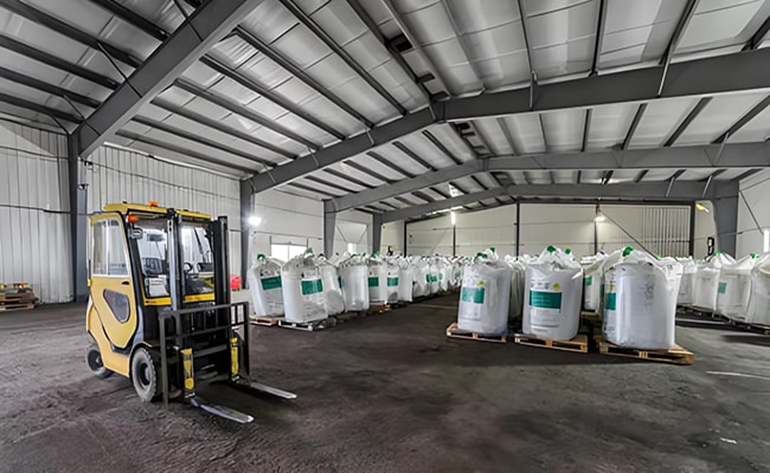
A steel structure grain storage warehouse can achieve spans of up to 60 meters without internal supports. This provides open, obstruction-free space for storage and equipment.
4. Durability and Longevity
Steel is resistant to pests, fire, and weather damage. When coated and protected with sandwich panels, it withstands decades of use even in humid or tropical climates.
5. Food-Grade Compliance
By using insulated sandwich panels such as polyurethane, a prefabricated warehouse can meet food safety standards. Smooth surfaces prevent mold and make cleaning easier.
Design Considerations for Grain Storage Warehouses
When planning a grain storage facility, several design aspects are critical:
- Height and Span: Storage zones typically range from 10–16 meters high to allow bulk stacking.
- Cladding Materials: Sandwich panels with polyurethane or rock wool cores provide insulation and protection.
- Ventilation Systems: Natural or mechanical ventilation helps regulate humidity.
- Foundations and Walls: A combination of reinforced concrete or brick walls at lower levels with steel superstructures above provides both stability and protection.
- Logistics Integration: Wide entrances, loading bays, and space for trucks are essential.
These elements combine to create a modern grain storage solution that protects both quality and value.
Case Study: Prefabricated Steel Grain Storage Warehouse
To demonstrate the application of these principles, consider a recent project:
- Dimensions: 40 meters wide × 80 meters long × 16 meters high.
- Span Design: Divided into two spans of 20 meters each, providing large interior space without central obstructions.
- Wall Construction: 3-meter-high brick walls provide strong base support and additional protection against pests.
- Roof and Wall Panels: 40mm thick polyurethane sandwich panels ensure insulation, humidity control, and food-grade safety.
This prefabricated steel grain storage warehouse effectively combines traditional stability with modern technology. The brick base offers resilience, while the steel frame and insulated panels guarantee long-term protection and easy maintenance. The double-span design allows large-scale storage while leaving ample room for equipment and handling systems.
For agribusinesses and cooperatives, this type of warehouse demonstrates how steel structure agricultural storage buildings can be tailored to specific needs, combining durability, efficiency, and compliance with international food standards.
Cost Considerations for Steel Grain Storage Warehouses
When investing in a grain storage building, cost is always a primary concern. Prefabricated steel warehouses optimize costs in several ways:
- Lower Initial Construction Costs
Compared to concrete, steel warehouses save on labor and material. Prefabrication further reduces waste. - Faster Return on Investment
Because construction is faster, operations begin earlier, leading to quicker ROI. - Lower Maintenance Costs
Steel requires minimal upkeep. Sandwich panels resist corrosion, mold, and weather damage. - Energy Efficiency
Insulated panels reduce energy consumption for climate control, lowering long-term operating expenses.
Long-Term Benefits for Grain Producers
Choosing a metal grain storage warehouse is a strategic decision that impacts the entire supply chain:
- Protects Grain Quality: Prevents mold and spoilage, maintaining market value.
- Supports Mechanization: Clear spans allow free movement of loaders and conveyors.
- Scalable and Expandable: Additional spans or extensions can be added as production increases.
- Environmentally Friendly: Steel is recyclable, supporting sustainable agricultural practices.
Conclusion: The Future of Grain Storage Solutions
As agriculture modernizes, the demand for efficient, scalable, and food-grade warehouses continues to grow. A prefabricated steel grain storage warehouse is not just a building—it is a solution that preserves harvests, reduces losses, and improves profitability.
By combining steel structure durability with prefabricated efficiency, grain producers can secure long-term infrastructure that adapts to changing market needs. Whether for small cooperatives or large agricultural enterprises, investing in a modern steel structure grain storage facility is a step toward sustainability, efficiency, and global competitiveness.