Welcome to Qingdao Steel Building Co., Ltd.
Wind Resistance Performance and Optimized Design of Steel Structures
06-02
2026
Wind Resistance Performance and Optimized Design of Steel Structures
Steel structures are widely utilized in modern construction due to their high strength, lightweight properties and convenient construction. However, their high flexibility makes them vulnerable to wind loads, which may trigger structural deflection, continuous vibration, local damage or even overall collapse. Therefore, scientific and standardized wind-resistant design is essential to ensure the safety, stability and service life of steel buildings. This article concludes the core design considerations for steel structure wind resistance.
1. Standardized Wind Load Calculation
Wind load calculation is the basis of wind-resistant design. Designers shall follow international specifications such as ASCE 7-16 and AISI S240-2020 to determine key parameters including basic wind speed, terrain roughness coefficient and wind vibration coefficient. For high-rise, long-span and irregular steel structures, conventional formula calculation is insufficient. Wind tunnel tests are required to obtain accurate wind pressure distribution, as local wind suction on complex structural parts often exceeds standard calculated values.
2. Aerodynamic Shape Optimization
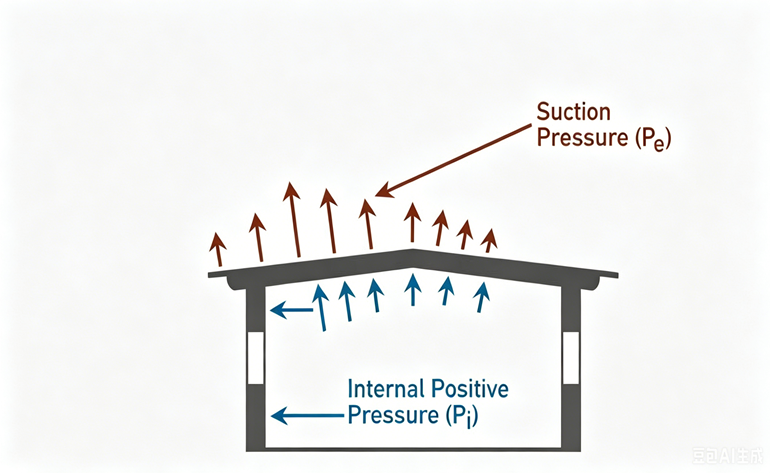
Building shape directly affects wind load distribution. Streamlined and curved architectural shapes can optimize airflow, reduce overall wind pressure and surface suction. In contrast, sharp corners and large flat enclosure surfaces easily cause vortex shedding and negative wind pressure, damaging roof and wall components. Optimizing roof slope, edge details and building ventilation can balance internal and external pressure, effectively reducing wind uplift and improving aerodynamic performance.
3. Structural System Optimization
A reasonable structural system forms a complete wind load transfer path from superstructure to foundation. For steel frames, optimizing member sections and controlling slenderness ratios can prevent buckling under combined wind and dead loads. Reasonably arranged bracing systems enhance overall structural rigidity and control lateral displacement. In addition, wind-sensitive components such as roof purlins and wall girts need optimized section size and connection strength to resist wind suction and dynamic impact.
4. Reliable Joint Connection Design
Joints are the weakest parts of steel structures under cyclic wind loads, which easily cause bolt loosening, weld cracking and fatigue damage. Welded joints with strict quality inspection ensure high rigidity for heavy steel structures. Prefabricated steel structures adopt high-strength bolted connections with standardized layout and anti-loosening measures. Key joints including beam-column connections and base anchorage should be reinforced to avoid local failure and progressive structural collapse.
5. Foundation and Anti-Uplift Design
Wind loads generate lateral shear force, bending moment and obvious uplift force, which may lead to structural displacement or overturning, especially for lightweight and large-span steel buildings. Foundation design must consider the combined effect of lateral wind force and wind uplift. For coastal and open-field buildings, deepened foundations, enlarged base areas and anti-uplift anchorage measures are necessary to improve overall structural stability under extreme wind conditions.
6. Vibration and Resonance Control
Flexible steel structures are prone to wind-induced vibration. Structural resonance will occur when wind excitation frequency matches the structural natural frequency, resulting in amplified deformation and fatigue damage. Designers can adjust structural stiffness and mass distribution to avoid frequency coupling. For flexible long-span and high-rise steel structures, damping devices such as TMD and viscous dampers, as well as aerodynamic optimization measures, can effectively suppress wind-induced vibration and vortex shedding.
7. Durability and Extreme Wind Adaptation
Long-term cyclic wind loads cause cumulative fatigue damage to steel structures. Wind-resistant design must meet both short-term bearing requirements and long-term durability. Buildings in typhoon-prone areas need reasonable design margins for extreme wind events. Moreover, corrosion protection is critical for steel structures. Anti-corrosion coatings and daily maintenance prevent section attenuation and stiffness reduction, maintaining stable wind resistance performance throughout the service period.
Conclusion
Wind-resistant design of steel structures is a systematic design process covering load calculation, aerodynamic optimization, structural layout, joint design, foundation reinforcement and vibration control. By complying with relevant codes, optimizing structural details and adapting to regional wind characteristics, designers can effectively improve the overall rigidity, stability and wind resistance of steel structures, ensuring safe and stable operation under frequent and extreme wind load conditions.