Welcome to Qingdao Steel Building Co., Ltd.
Prefab Steel Warehouse: Design Options, Structures, Sizes, and Applications
12-22
2025
Prefab Steel Warehouse: Design Options, Structures, Sizes, and Applications
What Is a Prefab Steel Warehouse?
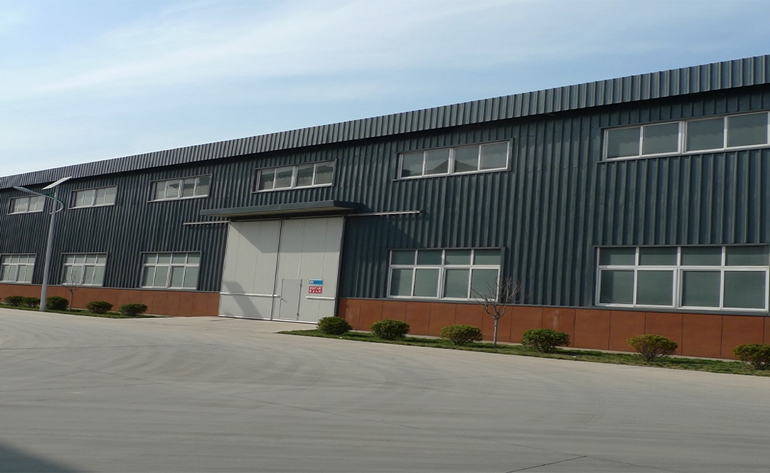
A prefab steel warehouse is an industrial building primarily composed of prefabricated steel structural components—such as columns, beams, purlins, and bracing—manufactured off-site and assembled at the project location.
Key characteristics include:
- Factory-controlled fabrication for consistent quality
- Rapid on-site installation with reduced labor demand
- Flexible structural layouts adaptable to different uses
- Long service life with proper corrosion protection
Prefab steel warehouses are commonly used for logistics centers, manufacturing plants, agricultural storage, cold storage facilities, and bulk commodity warehouses.
Key Structural Configuration Options
Prefab steel warehouses are not “one-size-fits-all” buildings. Several core structural decisions define how the warehouse performs in practice.
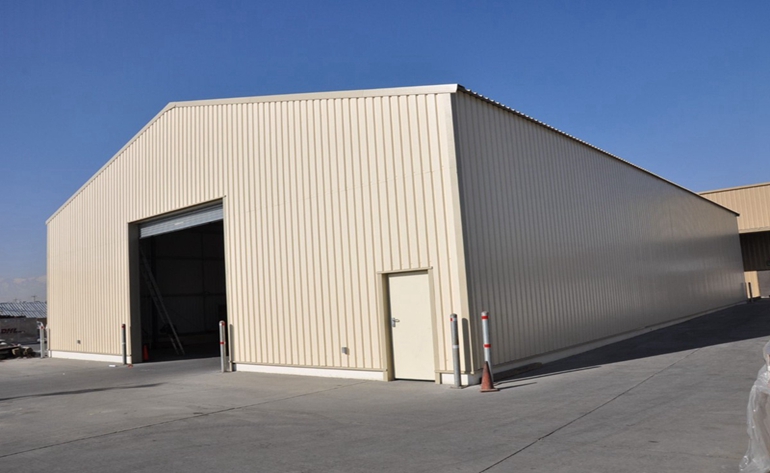
Span Configuration: Single-span vs Multi-span
One of the most fundamental choices is whether the warehouse adopts a single-span or multi-span structural system.
- Single-span prefab steel warehouses provide clear internal space without intermediate columns, making them suitable for logistics, aircraft hangars, and operations requiring flexible layouts.
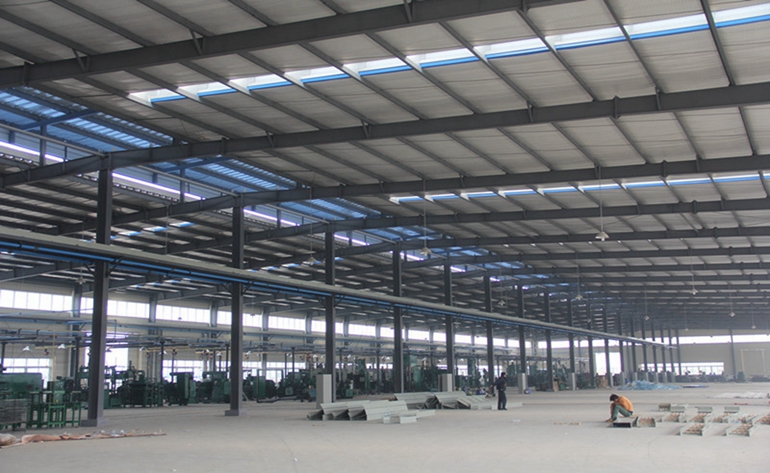
- Multi-span prefab steel warehouses introduce interior columns to distribute loads more efficiently, allowing wider buildings, heavier crane systems, and improved material efficiency for large footprints.
Story Configuration: Single-story vs Multi-story
Another critical decision relates to vertical space utilization.
- Single-story prefab warehouses emphasize simplicity, ease of operation, and ground-level load capacity.
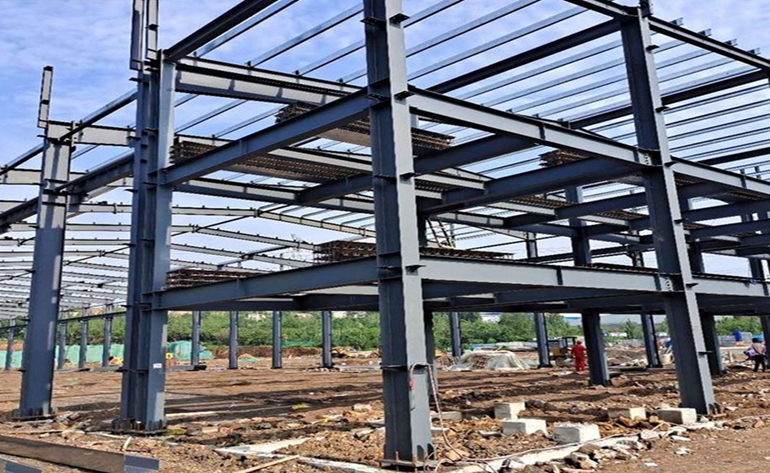
- Multi-story prefab warehouses maximize land efficiency in space-constrained sites and are often used for high-density storage or urban logistics.
Common Prefab Steel Warehouse Sizes
Prefab steel warehouses can be designed across a wide range of standardized and custom dimensions. Size selection affects structural efficiency, cost per square meter, and future expandability.
Typical configurations include:
- Medium-sized warehouses (e.g., 30 × 80 m, 40 × 60 m) for regional logistics and manufacturing
- Large-span warehouses (e.g., 50 × 100 m, 55 × 140 m) for bulk storage and industrial processing
- Custom layouts optimized for site constraints and operational flow
Functional and Use-Case Applications
The versatility of prefab steel warehouses allows them to be adapted to specialized operational requirements.
Warehouses with Mezzanine Floors
Mezzanine systems increase usable floor area without expanding the building footprint, making them ideal for combined storage and office functions.
Cold Storage and Temperature-Controlled Facilities
Cold storage warehouses require careful coordination between structure, insulation, and thermal systems. Steel structures provide the load-bearing framework needed to support insulated panels and refrigeration equipment.
Agricultural and Commodity Storage
Prefab steel warehouses are widely used for coffee, grain, and agricultural products, particularly in regions where rapid deployment and durability are critical.
Cost and Long-Term Value Considerations
Prefab steel warehouse cost is influenced by multiple interacting factors rather than size alone:
- Structural system (span and story configuration)
- Design loads (wind, seismic, snow, crane loads)
- Roofing and wall systems
- Corrosion protection and service environment
- Future expansion requirements
Well-designed prefab steel warehouses often achieve a service life of 40–50 years, with lower maintenance demands compared to conventional structures when appropriate coatings and detailing are applied.
How to Choose the Right Prefab Steel Warehouse Configuration
Selecting the optimal prefab steel warehouse solution requires balancing several project-specific factors:
- Land availability: Single-story and single-span layouts are favored where land is abundant
- Operational flow: Clear spans and simple layouts improve logistics efficiency
- Budget constraints: Structural efficiency directly affects steel consumption and cost
- Future expansion: Modular bay systems allow phased growth
- Environmental conditions: Wind, seismic, and corrosion exposure must be addressed in design
For this reason, prefab steel warehouse planning is best approached as a system decision, not a single-product selection.
Moving from Concept to Detailed Design
Once the appropriate warehouse configuration is identified, the project can progress into:
- Structural optimization
- Foundation design coordination
- Connection detailing and corrosion protection strategy
- Fabrication planning and installation sequencing
Each of these stages builds on the early decisions outlined in this guide.