Welcome to Qingdao Steel Building Co., Ltd.
Causes of Roof Skylight Belt Leakage in Steel Structure Buildings
05-29
2026
Causes of Roof Skylight Belt Leakage in Steel Structure Buildings
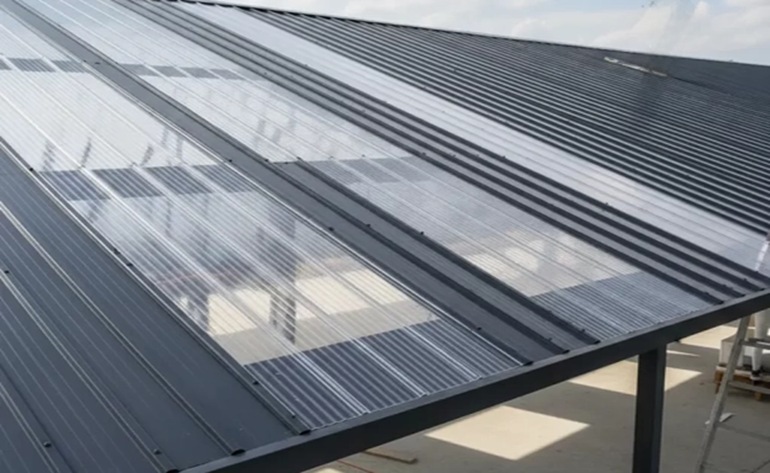
Roof skylight belt leakage ranks among the most prevalent and intractable waterproofing issues in steel structure buildings. Distinct from conventional concrete roofing systems, steel roofs consist of metal panels, flexible waterproof fittings and lightweight assembled connections, which render the peripheral joints of skylight belts the weakest part of the entire roof waterproof system. This leakage issue mainly stems from the unique structural properties of steel buildings, substandard construction operations, material degradation and long-term environmental impacts. The detailed causes are elaborated in the following sections.
1. Structural Deformation Induced by Steel Thermal Characteristics
The thermal expansion and contraction of steel components serve as the root cause of chronic skylight belt leakage. Steel roof sheets and skylight frames are highly sensitive to ambient temperature fluctuations. With seasonal temperature shifts between hot and cold conditions, metal components generate regular expansion and contraction displacement. As the transitional connecting part between rigid skylight frames and steel roof panels, the skylight belt endures repeated tension and compression cycles throughout its service life.
Such persistent micro-displacement gradually loosens the sealed joints of the skylight belt, triggers cracks in waterproof adhesive layers, and creates tiny gaps for rainwater penetration. Furthermore, steel buildings are prone to minor structural deformation under external loads including wind pressure, snow accumulation and pedestrian construction loads. This further exacerbates misalignment and gap widening at skylight belt connections, ultimately leading to rainwater seepage along joint crevices.
2. Non-standard On-site Installation and Construction Defects
Irregular field construction is the leading factor contributing to early-stage skylight belt leakage in steel buildings. The majority of seepage problems originate from overlooked construction details during the installation phase.
First of all, incomplete joint sealing. Many construction teams fail to apply foam filling at overlapping joints between skylight belts and steel roof panels, or leave gaps unfilled with sealant, creating latent water seepage passages. Secondly, non-compliant roof panel lapping. Inconsistent lap width and incorrect lapping sequences between skylight belt edges and color steel panels disrupt the roof’s overall waterproof slope, causing rainwater backflow and pooling at belt joints.
Thirdly, improper fastener selection and installation. Mismatched self-tapping screws or hollow rivets result in insecure fixation of skylight belts, while over-tightening fasteners causes local deformation of surrounding metal sheets, destroying the flatness and waterproof integrity of joint surfaces. Additionally, accidental damage to waterproof layers from arbitrary roof trampling during construction frequently leads to partial skylight belt leakage.
3. Aging and Performance Degradation of Waterproof Materials
Waterproof auxiliary components for skylight belts are susceptible to performance failure after long-term outdoor exposure. Sealants, rubber gaskets and waterproof flashing used for skylight belt installation are polymer-based materials that gradually deteriorate, harden, crack and pulverize under prolonged ultraviolet radiation, rainwater erosion and cyclic temperature changes.
Solar ultraviolet rays break down the molecular structure of sealants over time, diminishing their elasticity and adhesive properties. Typically after two to three years of service, joint sealants lose flexibility and detach from metal substrates, forming continuous penetration gaps. Meanwhile, rubber gaskets for belt fixation shrink and age, losing their sealing and cushioning capabilities, which allows rainwater to easily infiltrate through loose connection gaps.
4. Defective Flashing and Drainage System Design
Unreasonable waterproof and drainage design of skylight belts is a key contributor to recurring leakage. The skylight belt acts as a transition section between roof openings and roof panels, relying on complete flashing systems to form a fully enclosed waterproof barrier. Flashing design or installation errors—such as missing layered step flashing, improperly bent rear flashing or insufficient overlapping coverage—disrupt the normal rainwater diversion route.
In addition, most steel building roofs adopt a low-slope design (below 6%), which slows down rainwater drainage and easily causes water stagnation around skylight belt joints. Without dedicated drainage grooves and anti-overflow structures for skylight belts, pooled rainwater penetrates tiny joint gaps under hydraulic pressure, gradually expanding seepage areas and forming obvious leakage. In humid and rainy regions, wind-driven rain significantly aggravates this seepage phenomenon.
5. Condensation-induced Secondary Seepage and Misjudged Leakage
In high-humidity climates, condensation on skylight belts is often misidentified as rainwater leakage, and long-term condensation accumulation can also trigger structural water seepage. Steel skylight belts have poor thermal insulation performance, resulting in substantial temperature differences between indoor and outdoor roof surfaces. Indoor warm water vapor condenses into water droplets on the inner surfaces of skylight belts and adjacent metal panels.
These condensed droplets gather along belt joints and permeate into the roof’s structural layers. Long-term condensation erosion leads to mildew growth and hollowing of local waterproof layers, weakening material adhesion and forming permanent seepage channels. This hidden leakage issue commonly occurs in steel buildings during summer and rainy seasons.
Summary
To conclude, skylight belt leakage in steel buildings is a composite fault caused by the combined effects of steel structural displacement, non-standard construction practices, material aging, flawed waterproof and drainage design, and condensation accumulation. Among these factors, temperature-induced structural micro-deformation is the inherent root cause, while construction irregularities and material deterioration serve as the major direct triggers. Optimizing construction techniques, adopting high weather resistance waterproof materials, and upgrading flashing and drainage structures are the key measures to prevent and resolve skylight belt leakage problems effectively.