Welcome to Qingdao Steel Building Co., Ltd.
What Is a Steel Portal Frame Structure?
12-25
2025
What Is a Steel Portal Frame Structure?
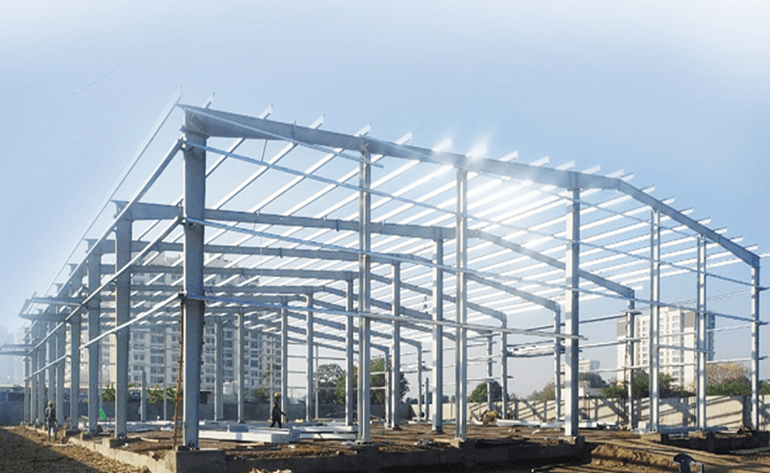
A steel portal frame structure is a building system characterized by a series of rigid frames made from steel columns and rafters. These components are connected using moment-resisting joints that form a rectangular or trapezoidal shape, allowing for long, unobstructed internal spans. The simplicity and strength of this framing method make it ideal for various functional buildings.
Key Features:
- Spans commonly range from 10 to 40 meters
- Utilizes lightweight steel profiles (e.g., H-sections, C/Z purlins)
- Prefabricated components enable rapid site assembly
- Connections are predominantly bolted for ease of installation
- Compatible with single-skin or insulated cladding systems
Such systems are particularly effective for industrial, agricultural, and commercial buildings where cost and speed are key project drivers.
Structural Elements of Steel Portal Frames
These buildings consist of the following major components:
- Columns and Rafters: The primary load-bearing members that create the structural skeleton.
- Haunches Reinforced connections at column-rafter joints to handle bending moments.
- Purlins and Girts are Secondary framing elements that support roofing and wall cladding.
- Bracing Systems provide lateral stability against wind and seismic loads, typically using diagonal or portal bracing.
- Cladding Panels can be single-layer metal sheets or sandwich panels for enhanced insulation.
Advantages of Steel Portal Frame Structures
- Economic Efficiency By minimizing material usage through optimal design, light steel frames significantly reduce steel consumption and associated costs. Foundations can also be simplified due to lower structural loads.
- Speed of Construction Factory-prefabricated components allow for quick delivery and fast erection, often reducing project timelines by several weeks compared to traditional systems.
- Adaptability The framing system allows for a wide range of building layouts, roof configurations, and cladding materials, offering architectural flexibility.
- Durability With proper protective coatings or galvanization, these structures offer excellent resistance to corrosion, pests, and weathering, particularly in challenging environments.
- Environmental Performance Steel is fully recyclable, and the reduced material usage and waste on-site contribute to more sustainable construction practices.
Common Applications
Steel portal frames are widely adopted in a variety of sectors:
- Small to mid-scale industrial facilities
- Agricultural sheds and processing units
- Prefabricated workshops and garages
- Cold storage and climate-controlled warehouses
- Modular commercial buildings
- Rural housing and utility structures
Design Considerations
- Span and Eave Height Structural design must consider the intended use, with spans typically between 10 to 40 meters and eave heights adjusted for clearance or crane requirements.
- Roof Geometry and Loads Roof pitch, live loads, and local wind pressures influence the selection of purlins, bracing, and cladding anchorage.
- Foundation Engineering Light steel frames exert reduced loads, permitting simplified footings, though proper soil analysis remains essential.
- Crane Compatibility For light industrial use, portal frames can support monorails or overhead cranes with appropriate design adjustments.
- Corrosion Protection Materials must be selected based on environmental exposure. Hot-dip galvanizing or high-performance coatings ensure long-term resilience.
Cost and Efficiency
Light steel portal frames provide a high return on investment due to their optimized use of resources:
- Lower steel tonnage per square meter
- Faster fabrication and simplified connections
- Reduced transportation volume due to compact profiles
- Shorter construction timelines
For instance, a 20x50m warehouse can typically be erected within 30 to 45 days with savings of 20–30% over heavier structural systems.
Conclusion: Why Choose a Steel Portal Frame Structure?
For projects requiring rapid delivery, cost control, and structural reliability, steel portal frames present an ideal solution. Their modularity, design flexibility, and durable performance make them suitable for a wide range of functional spaces—from agricultural storage to manufacturing workshops. With minimal environmental impact and long service life, they represent a smart investment in modern construction.