Welcome to Qingdao Steel Building Co., Ltd.
Steel Structure Indoor Racecourses: Revolutionizing Equestrian Facilities
01-12
2026
Steel Structure Indoor Racecourses: Revolutionizing Equestrian Facilities
Equestrian sports have long stood as a symbol of elegance, precision, and athleticism, yet their growth is often hindered by external factors—most notably, unpredictable weather. Outdoor racecourses leave horses and riders vulnerable to rain, snow, extreme temperatures, and strong winds, disrupting training routines, forcing competition cancellations, and even creating safety hazards. In recent years, the rise of steel structure indoor racecourses has become a game-changer, resolving these pain points while setting new benchmarks for equestrian facilities. Let’s dive into why steel is emerging as the top choice for modern indoor racecourses and how it’s reshaping the equestrian industry.
Why Steel Structures Excel for Indoor Racecourses
Indoor racecourses come with unique structural demands: large, unobstructed spans to fit long straightaways and wide turns, exceptional stability to bear heavy loads (including horses, riders, and spectator stands), and durability to withstand constant use and varying environmental conditions. Steel checks all these boxes, outperforming traditional materials like concrete and wood in several critical areas.
1. Spacious, Unobstructed Design
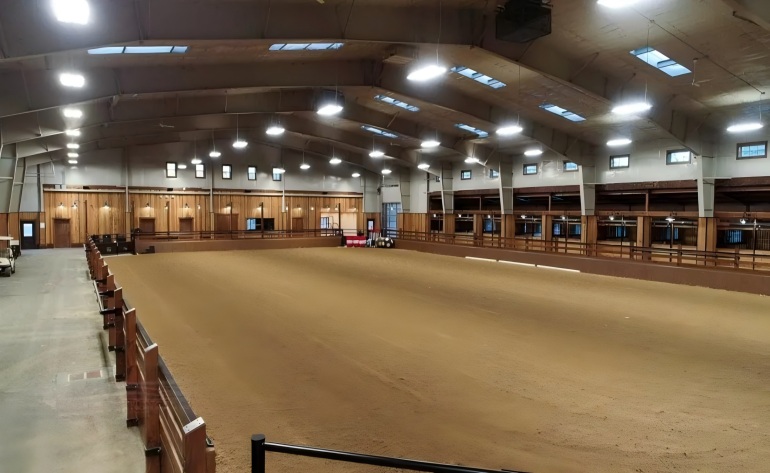
Equestrian races call for ample space—indoor tracks typically need to be 1,000 meters or longer, with widths between 15 and 20 meters to ensure horses can maneuver safely. Steel beams and trusses span large distances without requiring intermediate columns, which would disrupt the track layout and endanger horses. This structural flexibility lets architects design seamless, continuous tracks that replicate outdoor conditions while offering full enclosure. Whether it’s a standard oval track or a custom course for show jumping or dressage, steel structures deliver unmatched versatility in spatial design.
2. Superior Strength and Stability
Horses are powerful creatures, and the combined weight of horses, riders, and track surfaces (such as sand, synthetic turf, or dirt) places significant pressure on the facility’s structure. Steel is celebrated for its high strength-to-weight ratio—far stronger than concrete relative to its mass—ensuring the building can endure heavy loads and dynamic forces, like the impact of galloping horses. What’s more, steel structures boast excellent seismic resistance, making them a safe option in earthquake-prone regions. This stability protects not just the facility, but also the well-being of horses, riders, and spectators alike.
3. Fast Construction and Cost-Efficiency
Equestrian facilities are often large-scale projects, but steel structures drastically speed up construction timelines. Steel components are prefabricated in factories with precise engineering, cutting down on-site work and minimizing delays from weather or labor shortages. Unlike concrete, which requires lengthy curing periods, steel structures can be assembled quickly, letting the facility open sooner and generate revenue faster. Additionally, steel’s durability lowers long-term maintenance costs—it resists rot, pests, and moisture (unlike wood) and doesn’t crack easily under stress (unlike concrete). Over the facility’s lifespan, steel proves to be a cost-savvy investment.
4. Sustainability and Adaptability
With growing environmental awareness, sustainability has become a top priority in modern construction. Steel is one of the world’s most recyclable materials—over 90% of construction steel is recyclable, and recycling it consumes far less energy than producing new steel. This makes steel structure indoor racecourses a greener alternative to facilities built with non-recyclable materials. Steel structures are also highly adaptable: as equestrian needs evolve—whether expanding spectator capacity, adjusting track layouts, or adding amenities like stables or training zones—steel components can be easily modified, extended, or repurposed without major demolition, a feat hard to achieve with concrete or wood.
Key Design Considerations for Steel Structure Indoor Racecourses
While steel offers countless advantages, designing a successful indoor racecourse requires careful planning to balance functionality, safety, and comfort. Here are key factors to keep in mind:
- Ventilation and Climate Control: Indoor spaces can trap heat, humidity, and odors—all harmful to horses, which are sensitive to poor air quality. Steel structures integrate seamlessly with high-efficiency ventilation systems, HVAC units, and natural light solutions (such as skylights or translucent steel panels) to maintain optimal temperature, humidity, and air flow. This keeps both horses and humans comfortable.
- Track Surface Integration: The track surface is crucial for horse performance and safety. Steel structures must be designed to support the weight of the surface material and accommodate drainage systems to prevent water accumulation. Additionally, the building’s foundation should be stable to avoid unevenness in the track, which could cause injuries.
- Safety Features: Beyond structural stability, essential safety elements include non-slip flooring, crash barriers (made of shock-absorbing materials), and clear emergency exits. Steel’s versatility lets these features be integrated without compromising the building’s design or strength.
- Spectator Experience: Many indoor racecourses host competitions and events, so spectator comfort is key. Steel structures can support elevated stands, VIP areas, and amenities like restrooms and concession stands, all while maintaining unobstructed views of the track.
The Future of Equestrian Facilities
As equestrian sports gain popularity—both as a competitive pursuit and a recreational activity—the demand for high-quality, weather-resistant facilities will only grow. Steel structure indoor racecourses are leading this evolution, blending strength, flexibility, sustainability, and cost-efficiency seamlessly. From professional training centers to public equestrian parks, steel enables the creation of world-class facilities that elevate the sport while prioritizing the safety and well-being of horses and riders.Whether you’re an equestrian enthusiast, a facility developer, or an architect, steel structures represent the future of indoor racecourses. They not only overcome the limitations of outdoor facilities but also unlock new possibilities for innovation in equestrian design. As technology advances, we’ll see even more sophisticated steel structures—integrated with smart systems for climate control, track maintenance, and spectator engagement—further revolutionizing how we experience equestrian sports.Ready to turn your equestrian vision into reality with a steel structure indoor racecourse? Consult a professional steel structure engineer to design a facility that meets your unique needs and exceeds industry standards.