Welcome to Qingdao Steel Building Co., Ltd.
Seismic Performance of Steel Structures in High-Risk Areas
09-17
2026
Seismic Performance of Steel Structures in High-Risk Areas
Seismic safety is a core and non-negotiable concern for industrial warehouses, commercial buildings, and public facilities constructed in earthquake-prone regions. Traditional concrete structures are rigid and prone to brittle fracture under intense seismic vibration, which poses huge safety risks and economic losses. In contrast, steel structures stand out for their superior anti-seismic capacity and stable mechanical performance, becoming the preferred building solution in high-risk seismic zones around the world.
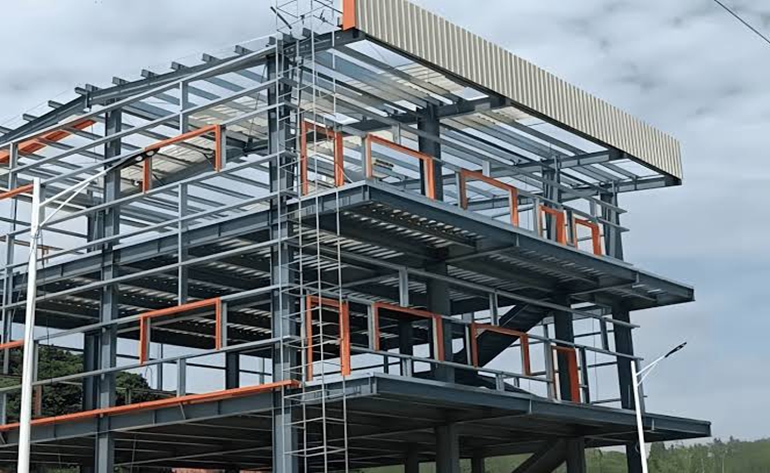
Structural steel features excellent ductility and flexible structural toughness, the two key properties that determine seismic resistance. Unlike rigid concrete frames that crack and collapse suddenly, steel frames can bend and deform moderately under seismic impact. This controllable deformation effectively absorbs and dissipates massive vibration energy, preventing overall structural collapse and protecting building assets and personnel. The integrated frame system composed of rigidly connected columns, beams and professional bracing systems locks the entire structure into a stable whole, ensuring balanced force transmission during earthquakes.
In addition, the lightweight self-weight of steel structures greatly reduces the vertical and horizontal seismic loads applied to building foundations, lowering the risk of foundation settlement and structural tilting. Every seismic-resistant steel building undergoes professional structural analysis, precise load calculation and standardized connection processing, including high-strength bolt connections and reinforced bracing design. Strict factory fabrication and on-site installation standards further guarantee long-term structural stability. With reliable seismic performance, flexible design and strong environmental adaptability, steel structures remain the safest and most cost-effective solution for construction projects in high-seismic-risk areas worldwide.