Welcome to Qingdao Steel Building Co., Ltd.
How to Secure the Safety of Steel Structure Buildings
07-21
2026
How to Secure the Safety of Steel Structure Buildings
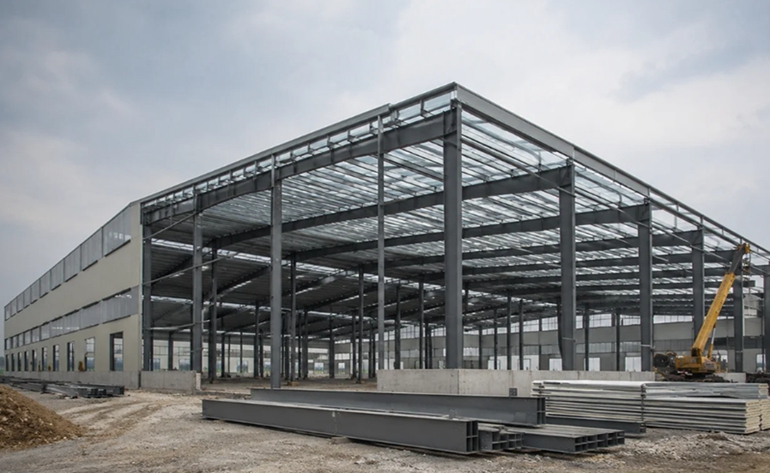
Steel structures face core risks including structural collapse, corrosion, fire damage and seismic failure. Safety control runs through four full-cycle stages: design, factory fabrication, on-site construction, and long-term operation & maintenance.
1.Strict Safety-Oriented Design (Fundamental Guarantee)
Load & Seismic Calculation
- Accurately compute all permanent & variable loads: dead load, live load, wind load, snow load, crane dynamic load, and seismic load per local building codes (e.g. GB 50017, Eurocode 3, AISC).
- Adopt Finite Element Analysis (FEA) and BIM simulation to test extreme weather, earthquake and overload scenarios, set reasonable safety margins and structural redundancy to avoid progressive collapse if single components fail.
Material & Connection Design
- Select qualified structural steel (Q235, Q345 etc.) with complete mill test certificates matching the corrosion environment grade (ISO 12944 C1–C5).
- Design reinforced rigid/moment-resisting connections for beam-column joints; connections shall bear higher force than connected steel members, to resist lateral shock and deformation.
Special Protection Design
- Anti-corrosion system: Match hot-dip galvanizing, epoxy primer and polyurethane topcoat based on humidity, salt fog and industrial acid rain environment.
- Fire protection: Calculate required thickness of fire-resistant coatings for columns, beams and floor joists to meet fire resistance rating standards.
- Set horizontal/vertical bracing systems to enhance overall lateral stability against strong wind and earthquakes.
2. Precision Quality Control in Factory Fabrication
- Raw material incoming inspection: Verify steel grade, tensile strength and chemical composition; reject unqualified steel plates and profiles.
- Standardized processing: Control cutting, drilling and assembly dimensional tolerances strictly following drawing requirements.
- Welding & bolt inspection: Assign certified welders; apply Non-Destructive Testing (NDT: ultrasonic, magnetic particle detection) on critical weld seams. Tighten high-strength bolts with standardized torque and record data completely.
- Pre-treatment before delivery: Complete full anti-rust coating, inspect coating thickness and integrity to avoid bare steel exposure.
3. Standardized On-Site Erection & Construction Safety
Stable Installation Process
- Use BIM + RTK positioning to control column verticality and component horizontal deviation; install temporary diagonal supports immediately after steel column erection to prevent tilting before the whole frame forms a stable system.
- Install permanent floor slabs layer by layer; limit unfinished steel height to avoid sudden collapse during constructionOccupation....
On-Site Operation Management
- All construction workers must receive professional training on high-altitude work, hoisting and welding; wear complete fall protection equipment.
- Inspect cranes, lifting slings and safety latches before each shift; prohibit overload hoisting and collision with installed steel componentsOccupation....
- Strictly protect finished anti-corrosion and fire coatings; repair scratches and damage on site timely.
Third-Party Acceptance
Complete overall structural deflection test, bolt torque recheck and fire/anti-corrosion coating inspection before handover; issue formal safety acceptance reports.
4. Long-Term Operation & Regular Maintenance (Lifelong Safety Barrier)
Periodic Visual & Professional Inspection
- Routine visual check every 6 months: Focus on weld joints, bolt connections, coating surfaces, roof purlins and wall panels for corrosion, cracks, deformation or loose fasteners.
- Full technical assessment every 2 years; add emergency inspection after typhoons, heavy snow, fires or nearby construction excavation that may damage the structure....
- Professional testing for buildings over design service life, or those with heavy crane dynamic loads.
Timely Repair of Hidden Dangers
- Anti-corrosion maintenance: Touch up peeling, chipped or rusted coatings; re-galvanize severely corroded components.
- Connection reinforcement: Retorque loose high-strength bolts; repair cracked welds via secondary welding.
- Fire safety maintenance: Supplement damaged fire-resistant coatings; inspect sprinklers, smoke detectors and clear fire escape passages regularly.
Standardized Usage Rules
- Forbid unauthorized cutting, welding, drilling or additional heavy hanging loads on steel beams/columns without engineer approval.
- Control indoor fire sources; separate flammable goods from steel frames with fire barriers to prevent high-temperature softening of steel.
- Block wall gaps and pipe openings to stop rodent/bird damage to insulation and joint components.
Core Summary
The safety of steel buildings relies on closed-loop management covering code-compliant design, zero-defect factory fabrication, standardized on-site erection, and full-lifecycle maintenance. Reasonable anti-corrosion and fire protection systems, plus regular structural inspection, are the most critical long-term safety safeguards.
To guarantee long-term safety of steel structure buildings, we implement full-cycle control:
✅ Seismic & wind-resistance redundant design
✅ Certified raw steel + welding inspection
✅ Precise on-site erection with BIM monitoring
✅ Complete anti-corrosion & fireproof coating system
✅ Scheduled structural maintenance service
We deliver stable, durable steel workshops & warehouses for global partners.