Welcome to Qingdao Steel Building Co., Ltd.
How to Ensure the Safety of Steel Structure Building
08-19
2026
How to Ensure the Safety of Steel Structure Building
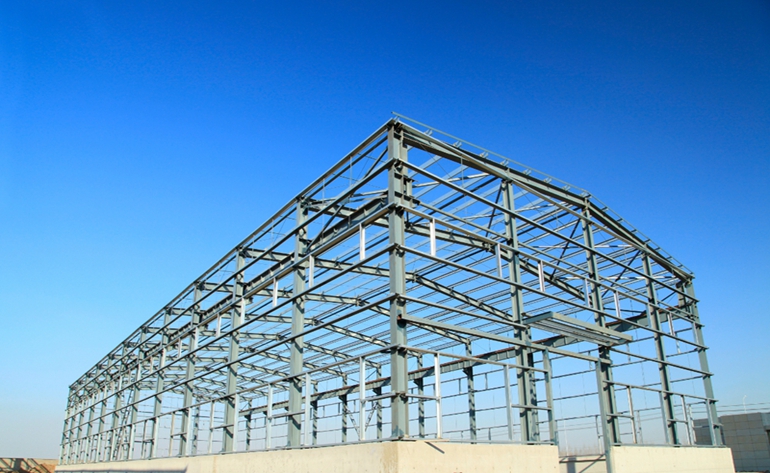
Steel structure buildings have advantages such as high strength, light weight and fast construction, but they face hidden dangers including fire risk, corrosion, fatigue damage and structural instability. Safety guarantee measures can be implemented throughout design, manufacturing, construction, operation and maintenance stages as follows:
1. Standardized Structural Design
- Adopt national and international load specifications to accurately calculate dead load, live load, wind load, seismic load and temperature stress, and reserve sufficient safety margin.
- Reasonably select steel grades, cross-section forms and connection modes (welding, high-strength bolts) to avoid stress concentration.
- Strengthen fire-resistant design: steel loses strength rapidly under high temperature. Design targeted fire protection schemes according to fire resistance rating requirements.
- Conduct anti-corrosion design in advance for buildings in coastal, chemical and humid environments.
2. Strict Quality Control in Factory Processing
- Strictly inspect raw steel materials, verify material certificates and conduct sampling tests for mechanical properties and chemical composition.
- Control welding quality: avoid welding defects such as cracks, pores and incomplete penetration; carry out non-destructive testing (UT, RT) for key welds.
- Ensure the processing precision of components, control dimensional deviation, and standardize the fabrication of bolt holes and connecting plates.
3. Standardized On-site Construction & Installation
- Compile special construction schemes for hoisting, high-altitude operation and temporary support; set reliable temporary supports to prevent overall instability during installation.
- Control the construction sequence. Do not remove temporary supports before all permanent connections are completed.
- Tighten high-strength bolts following specified torque requirements; strictly inspect the quality of on-site welding.
- Construct fire protection coating, anti-corrosion paint and external enclosure in accordance with design thickness and process.
4. Fire Prevention Safety
- Apply qualified fireproof coatings and guarantee the coating thickness to meet required fire resistance limit.
- Equip the building with fire alarm systems, automatic sprinklers, fire exits and fire separation facilities.
- Manage hot work (welding and cutting) on site; eliminate flammable materials nearby and arrange special guardians.
5. Long-term Anti-corrosion Protection
- Use surface treatment processes: shot blasting, rust removal, primer, intermediate paint and topcoat.
- Regularly inspect paint peeling, rust expansion at beam-column joints, bottom of steel beams and bolt positions.
- Timely repair damaged anti-corrosion layers; adopt special anti-corrosion steel or cathodic protection for severely corrosive environments.
6. Daily Operation, Inspection and Maintenance
- Establish regular inspection systems: routine visual inspection, periodic professional detection. Focus on connections, support systems, roof purlins and bearing components.
- Monitor abnormal phenomena: obvious deformation, paint cracking, rust development, abnormal noise under load.
- For buildings under long-term dynamic load (workshops with cranes), regularly check fatigue cracks.
- Prohibit unauthorized modification: do not randomly cut steel members, add heavy equipment or open holes without professional structural verification.
7. Disaster Prevention & Emergency Management
- After extreme weather (strong wind, earthquake, heavy snow), organize special safety inspections immediately.
- Formulate emergency plans for structural accidents, clarify evacuation routes and reinforcement disposal measures.
- Arrange regular safety training for managers to identify early structural risks.